



Classification and organization of shelves in different scenarios
Click:
Time:2024-12-06 11:44:18
In commercial and retail environments, shelves are important tools for displaying products, optimizing space utilization, and improving customer shopping experience. However, in different scenarios, the classification and organization of shelves may need to be adapted to local conditions.
1. Classification by purpose: Focus on functionality
- Retail scenario
In retail stores, the organization of shelves should give priority to the customer's shopping process. For example:
Hot-selling areas: Place small and high-frequency products at the entrance or near the cash register to attract impulse purchases.
Classification display: Partition according to product types, such as food, clothing, daily groceries, etc., so that customers can quickly find the target products.
- Warehouse scenario
Shelf classification in warehouses needs to pay more attention to practicality and efficiency:
SKU classification: Place high-turnover products close to the shipping area to reduce pickup time.
Vertical stratification: Use height to distinguish light and heavy goods to ensure safety.
- Office scenario
In office scenarios, shelves are mostly used for filing or storing office supplies:
Classification by frequency: Frequently used documents are placed in easy-to-access areas, and infrequently used archived materials are placed higher or farther away.
Label management: clearly label shelves and items to improve search efficiency.
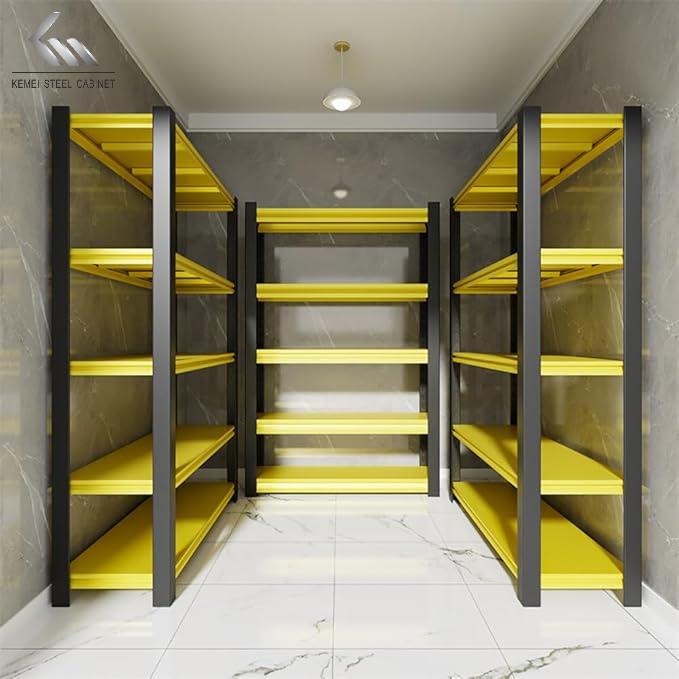
2. Classification by layout: improve space utilization
- Island layout
Common in supermarkets and hypermarkets, multiple "islands" are formed through central shelves and surrounding shelves. This layout can guide customers to browse sequentially, increase shopping time and purchase probability.
- Aisle layout
Suitable for warehouses or convenience stores, shelves are arranged in parallel aisles, simple and efficient, convenient and fast retrieval and replenishment.
- Hybrid layout
Combine the advantages of island and aisle layout. For example, in retail stores, the central area uses islands to display promotional items, and the periphery uses aisles to store basic goods.

3. Classification by visual effects: attract customer attention
- Color zoning
Divide products according to color or theme. For example, in home furnishing stores, the sense of style is enhanced through the display of shelves with unified colors to attract customers to stop.
- Height distribution
Height has a direct impact on customer sight. It is recommended to place core products in the golden sight range of the shelf (120cm-160cm) to increase sales.
- Dynamic display
Use movable shelves or rotating shelves to achieve dynamic display effects and enhance interactivity.
Whether in retail, warehousing or office scenarios, the classification and organization of shelves should be based on actual needs, balancing functionality, visual effects and management efficiency. Through reasonable layout and classification, not only can space utilization be improved, but also a better experience can be created for customers.
If you need more advice on shelf design and application, please contact our team Kemei. We will provide you with professional solutions!

点击右上角
分享给朋友吧







 Long by picture save/share

 Kitty
Kitty