



What features should a bunk bed for school use have?
Click:
Time:2025-09-25 15:32:42
Bunk beds in schools are essential for students' daily life and rest, and they require the following features:
Safety
Strong structure: The bed frame must be made of sturdy materials, such as high-quality steel. The wall thickness of the steel must meet relevant standards. Generally speaking, a wall thickness of 1.0-1.2 mm is suitable for school bunk beds. For example, cold-rolled steel sheets offer excellent strength and toughness, allowing them to withstand significant weight. All joints, such as the crossbeams and uprights of the bed frame, must be secured with reliable welding or high-strength screws to prevent loosening during long-term use.
The design of the bed ladder is also crucial. The treads should be wide enough, generally no less than 20 cm, to prevent students from stepping on empty space when getting in and out of bed. The treads should also be spaced appropriately, typically around 20-25 cm, to facilitate climbing while preventing feet from getting stuck. It's best to have guardrails on both sides of the bunk bed ladder, at least 20 cm high, to prevent students from losing balance and falling when getting in and out of bed.
Rounded Corners
The corners of the bunk bed frame, ladder, and other parts should be rounded. Because school students vary in age and are active, sharp corners can easily cause abrasions, bumps, and other injuries during daily activities. Rounded corners can significantly reduce this risk. Generally, the radius of the rounded corners should be no less than 10 mm.
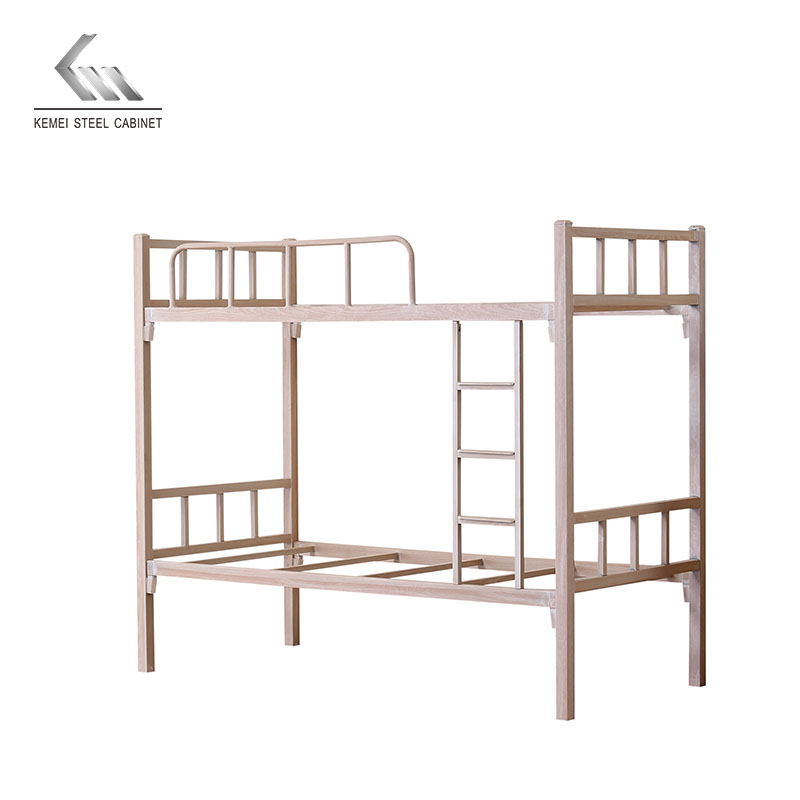
Properly Designed Guardrails
The height of the guardrails on the upper bunk is crucial for safety. Guardrails should be at least 30 cm high, and the gap between the guardrails should be less than 10 cm. This prevents students from rolling over in their sleep, with their heads or other body parts protruding from the guardrails, potentially preventing falls. Guardrails should also be made of a sturdy material, usually the same as the bed frame, to ensure overall safety.
Compliance with Safety Standards
Bunk beds in schools must comply with relevant national or regional safety standards. For example, my country has specific safety standards for student furniture, including limits on harmful substances like formaldehyde emissions and heavy metal content. Formaldehyde emissions should meet the E1 standard, meaning less than or equal to 1.5 mg/L, to ensure students are protected from harmful gases during use.
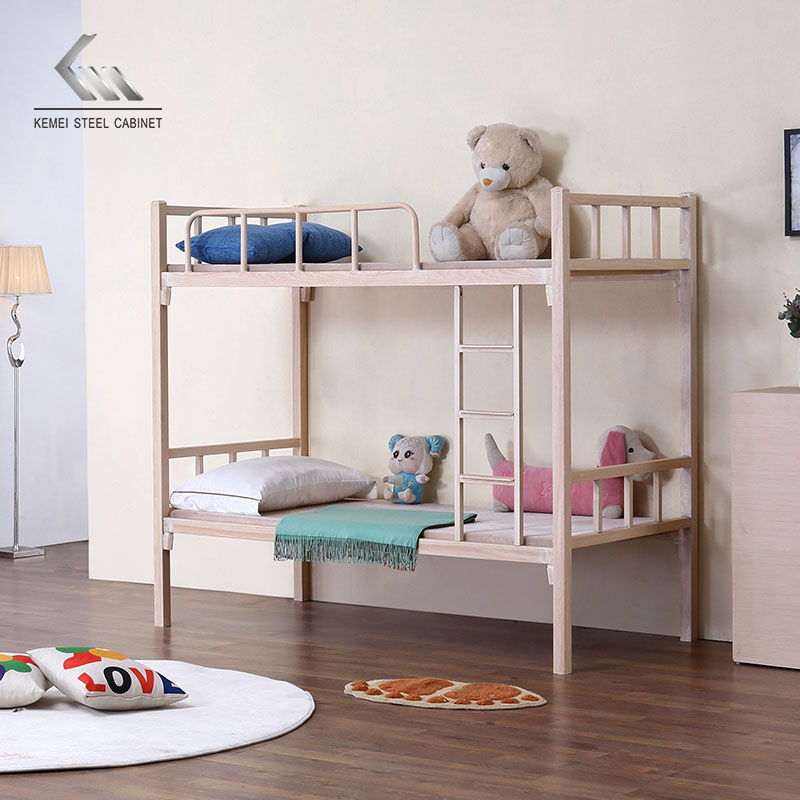
Practicality
Appropriate size: The bed size should be determined based on the student's age and physical development. For lower elementary school students, a bed length of approximately 1.8 to 1.9 meters and a width of 0.8 to 0.9 meters are appropriate. For middle and high school students, the length can be increased to 1.9 to 2.0 meters, with a width of 0.9 to 1.0 meters. This ensures students have ample sleeping space and avoids feeling overcrowded.
The bed height should also be appropriately designed. The upper bunk bed's surface is generally 1.5 to 1.7 meters above the ground, making it convenient for students to get in and out without taking up too much space. At the same time, the distance between beds should also be considered. Generally, the width of the passage between two rows of beds should not be less than 80 cm to facilitate students to move between beds and teachers to manage them.

点击右上角
分享给朋友吧







 Long by picture save/share

 Kitty
Kitty